
Bitcoin vs Banks: What if the Blockchain was the 5,000-Year Standard?
In brief
- Self-custody vs fractional reserve: You hold real Bitcoin; banks hold IOUs they lend out.
- One global standard vs 180 currencies: Bitcoin works everywhere; fiat requires costly conversions.
- Instant settlement vs SWIFT delays: Bitcoin settles in minutes; banks take 3–5 business days.
- Permissionless vs KYC gatekeeping: No one can freeze your Bitcoin wallet.
- Deflation vs inflation: Technology makes things cheaper—Bitcoin lets you keep those gains.
Imagine for a second that we live in a world where money has always been like the internet: a clean, automated, global protocol running for the past 5,000 years. You hold your own keys, and when you want to send value to someone in Tokyo or Tihihuana, you just… do it. It’s instant, it's permissionless, and you have total control.
Now, imagine a rogue "innovation consultant" walks into the room with a revolutionary new pitch. He’s wearing a sharp suit, carrying a 400-page compliance manual, and he looks you dead in the eye.
"Listen," he says. "I’ve got a better idea. It’s called Traditional Banking. It’s massively bureaucratic, incredibly slow, and—get this—we’re going to charge you for the privilege of using it."
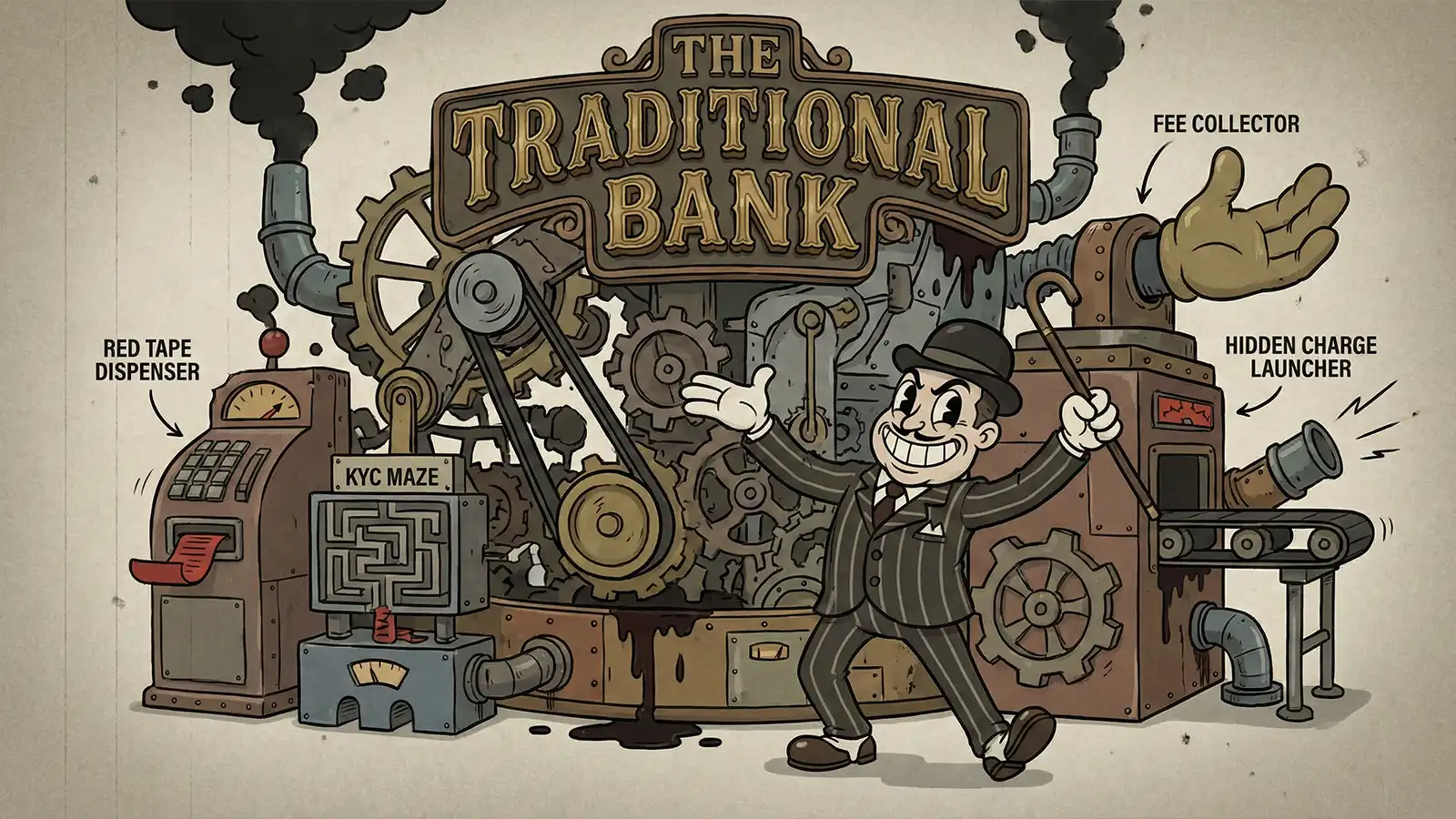
Bitcoin Self-Custody vs Fractional Reserve Banking
In our natural world, you own your money. In the consultant’s world, you give it to him. He calls this a Bank.
"Instead of you having your own keys," he explains, "you’ll hand your savings to us. We’ll keep it in a central place. Of course, it’s not actually there. We use something called Fractional Reserve Banking, meaning we lend it out and we can do this because your money is not actually yours, it's ours and you just have a claim on it. It’s a masterpiece of systemic risk! If everyone decides they want their money back on the same Tuesday, the whole thing collapses into the sand. We call that a 'Bank Run.' It adds a lovely bit of drama to the economy, don't you think?".
One Global Standard vs 180 Fiat Currencies
"Currently," the consultant says, "you use one global standard. Boring! My system uses 180 different local versions. We’ve got Dollars, Euros, Shekels, Zlotys, you name it.
"Are they interchangeable? Absolutely not. If you’re in London and want to buy a coffee in Paris, you have to pay a middleman to 'exchange' your numbers for their numbers. It’s a friction-festival!". It keeps thousands of people in glass towers employed doing absolutely nothing but translating one local delusion into another. We call it 'Forex.' It’s a bit like having 180 different versions of the internet that don't talk to each other unless you pay a toll at every border."
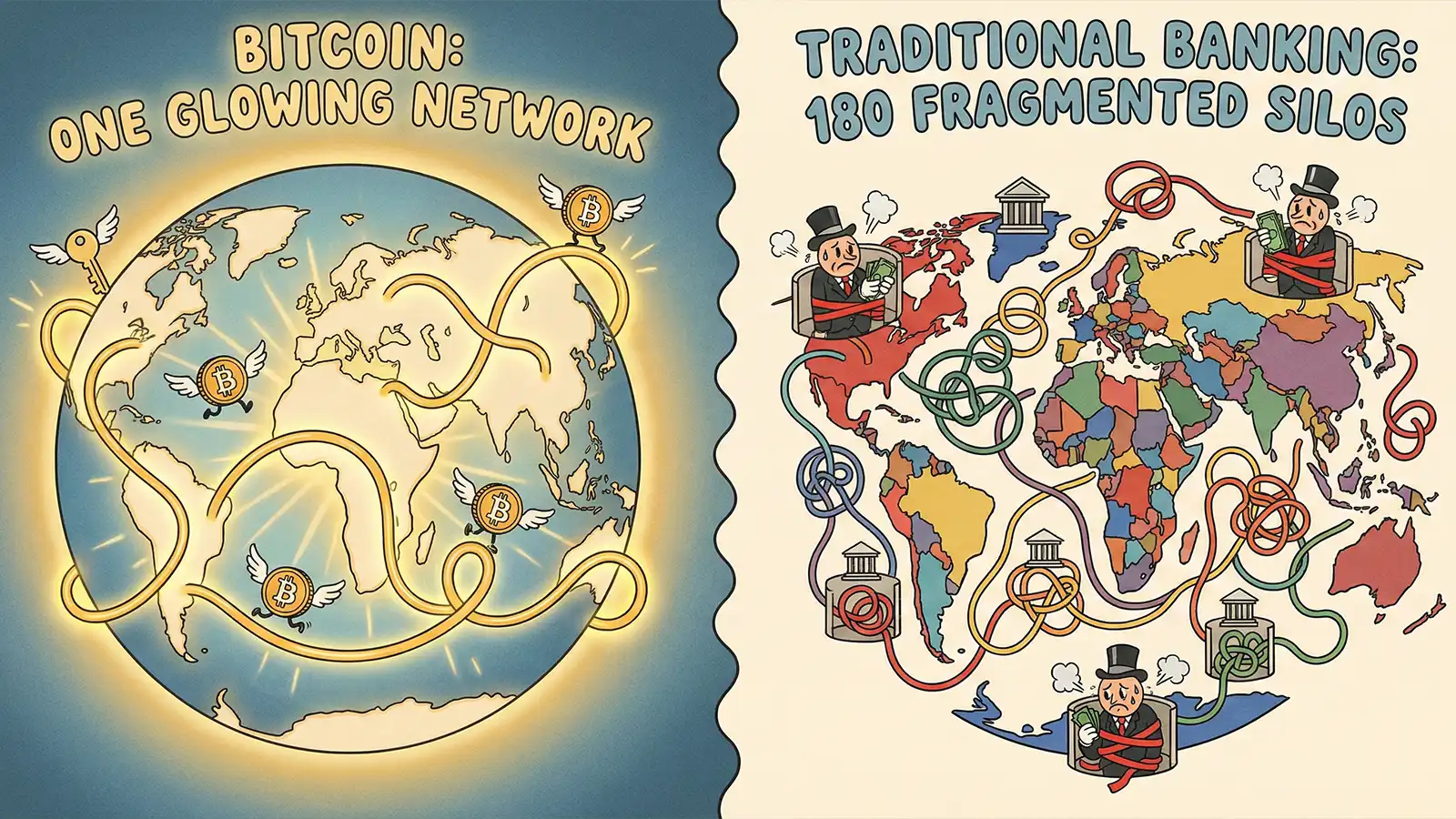
The Bitcoin Protocol vs The SWIFT Network
"You like instant transactions? How quaint. My system uses a series of 'Clearing Houses' and a messaging protocol called SWIFT.
"If you want to send money across an ocean, it’ll take three to five business days because several different offices in several different time zones need to manually approve the spreadsheet".
Permissionless Transactions vs KYC Centralization
"Why is approval needed?" The consultant grins, "We will call it KYC (Know Your Customer).
"If you try to move too much of your own money, we’ll block the transaction. Then, we’ll call you and ask what you’re doing with it. If we don’t like your answer—or if you’re a 'politically exposed person'—we simply turn your account off. It’s the ultimate control system".
What? Who would benefit from that? "Well, primarily the people who run the system! We like to ensure that the world stays neatly divided into 'compliant' and 'non-compliant. I'm sure you understand."
Bitcoin Deflation vs Fiat Inflation
"Finally," he says, "we’ve engineered the money to lose value on purpose. We call it Inflation. We aim for a 'modest' 2% loss every year so people don't tend to notice their life energy evaporating."
"And I have to be honest, technology does make things cheaper and your money should be buying you more every year. But we’ve fixed that! We print more units to make sure prices keep going up, effectively stealing your time while you’re asleep".
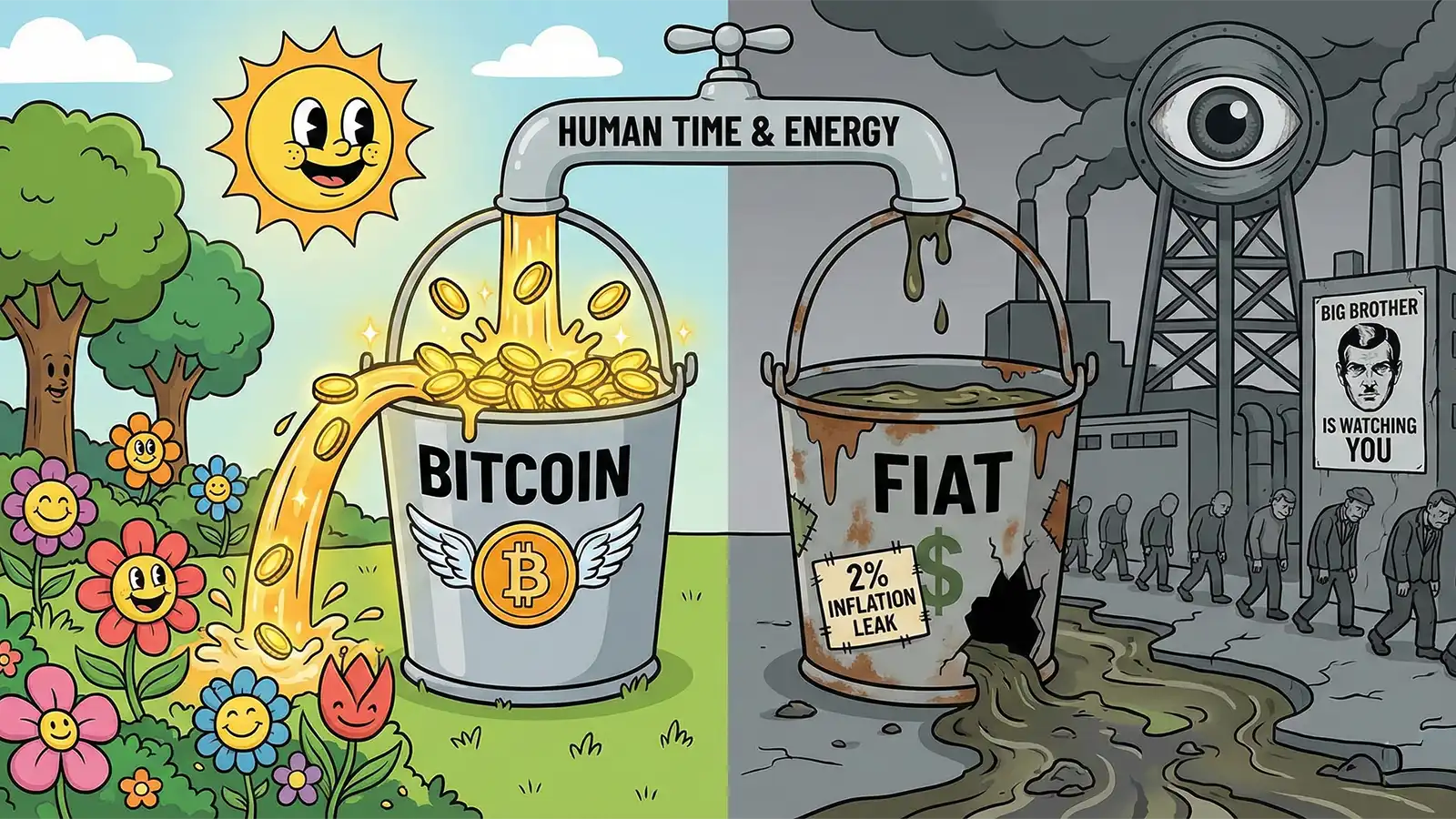
Who Would Buy This?
If the "Bank" were pitched today as a new technology, it would be laughed out of the room. It requires "central bankers" to manually adjust the "interest rate" (the price of time) based on their own gut feelings and political pressure.
It is, quite literally, a legacy bug that the world is finally outgrowing.
The Shift to Simplicity
The natural state of a free market is deflation—where your hard work buys you more over time, not less. Bitcoin isn't just "digital gold"; it’s the restoration of an honest system where no one has to ask for permission just to exist.
Ready to stop using the "broken boiler" of legacy finance?
The transition is already happening. You don't need to wait for a government to approve it; you just need to move your energy. You can choose the "Star Trek" future of abundance or stay stuck in the "Star Wars" future of crumbling empires and central control.
Take control of your money
- Learn the basics: What is Bitcoin? — understand the protocol that makes self-custody possible.
- Buy your first sats: Compare Bitcoin on-ramps — find an exchange that fits your country and privacy preferences.
- Store it safely: Compare wallets — move your Bitcoin off the exchange and into self-custody.
Frequently asked questions
What is fractional reserve banking?
Fractional reserve banking means banks only keep a fraction of your deposits on hand and lend out the rest. Your "balance" is really just a claim—if everyone withdraws at once, the bank fails. With Bitcoin self-custody, you hold the actual asset, not a claim on someone else's ledger.
Why are there so many different currencies?
Each nation issues its own fiat currency, creating 180+ different moneys that don't interoperate. Moving value across borders requires foreign exchange, with fees and delays at every step. Bitcoin is one global standard—no conversion needed.
What is SWIFT and why is it slow?
SWIFT is a messaging network banks use to coordinate cross-border payments. It involves multiple intermediaries in different time zones manually approving transactions, which is why international wires take 3–5 business days. Bitcoin settles globally in minutes, 24/7.
What does KYC mean and why does it matter?
KYC (Know Your Customer) refers to identity verification requirements imposed by banks and exchanges. While intended to prevent crime, it also means gatekeepers can freeze accounts or deny service. Bitcoin transactions are permissionless—no one can stop you from using the network.
Is inflation really stealing my savings?
Inflation means each currency unit buys less over time. Central banks target around 2% yearly, but technology naturally makes goods cheaper. Printing more money offsets those gains, quietly transferring purchasing power from savers to debtors and asset holders. Bitcoin's fixed supply preserves value instead of diluting it.